






All About Lent
Jump to Sections:
- What is Lent?
- Lent & Easter Schedule
- FORMED: Learn More (Video & Audio)
- FAQs About Lent
- Prayers & Devotionals

Lent is…
the primary penitential season in the Church year; it begins on Ash Wednesday and ends with the celebration of the Easter Triduum (6 Sundays and 40 weekdays). It reflects the 40 days Jesus spent in the desert in prayer and fasting. During this intense time, Christians increase their prayer lives with spiritual exercises and penitential practices. They strengthen themselves with fasting or voluntary acts of self-denial. They practice almsgiving and charitable sharing, as stated in the following paragraph from the Catechism of the Catholic Church.
The season and days of penance in the course of the liturgical year (Lent, and each Friday in memory of the death of the Lord) are intense moments of the Church’s penitential practice. These times are particularly appropriate for spiritual exercises, penitential liturgies, pilgrimages as signs of penance, voluntary self-denial, such as fasting and almsgiving, and fraternal sharing (charitable and missionary works). – CCC # 1438
The penitential disciplines of prayer, fasting, and almsgiving are Lenten practices we do to bring about a change ourselves as we turn more toward God.
What might you do this Lent in these three traditional areas: Prayer, Fasting, Almsgiving?
Back to the Top

Lent 2026: February 18 – April 2
Easter 2026: April 3 – May 24
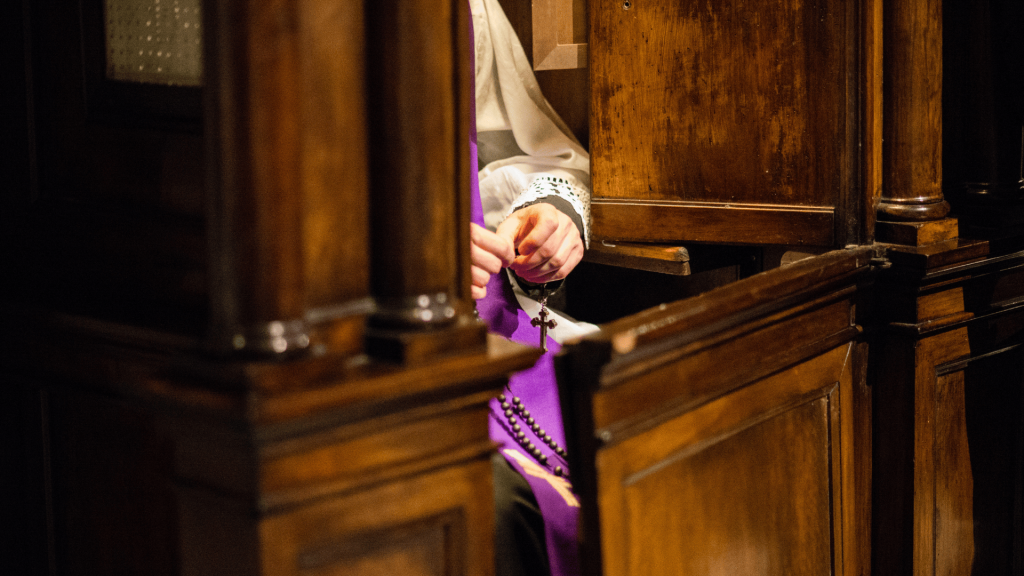
Regular Confession times:
prior to Saturday & Sunday Masses,
Tuesdays 6:00-7:00 PM,
Wednesdays 5:00-6:00 PM
*except where noted
Holiday Office Hours
Church office closed
Thursday, April 2 – Monday, April 6
Ash Wednesday
Wednesday, February 18
Day of Fasting and Abstinence
6:30 AM, 8:30 AM, & 7:00 PM Masses
Thursdays of Lent
February 19 to March 26
6:30 AM & 8:30 AM Masses
Fridays of Lent
February 20 to March 27
Abstain from meat (eat fish)
6:00 PM Stations of the Cross,
6:30 PM Lenten Potluck
Night of Reconciliation
Tuesday, March 10
*5:00-7:00 PM Confessions
Anointing of the Sick
Fourth Sunday of Lent (Laetare Sunday)
Wear pink to Mass
March 14 & 15 – All Masses
Palm Sunday
Distribution of Palms at each Mass
March 28 & 29 – All Masses
Monday of Holy Week
Monday, March 30 – 8:30 AM Mass
Tuesday of Holy Week
Tuesday, March 31
8:30 AM Mass,
5:30 PM Chrism Mass at Holy Family Cathedral
*NO Confessions
Wednesday of Holy Week
Wednesday, April 1 – 8:30 AM Mass
Holy Thursday
Mass of the Lord’s Supper
Thursday, April 2
7:00 PM Mass, Adoration and *Confessions until Midnight
Good Friday
Friday, April 3
3:00 PM Stations of the Cross,
7:00 PM Lord’s Passion & Veneration of the Cross,
*1:00 PM & 4:00 PM Confessions
Holy Saturday
Saturday, April 4
8:15 PM Easter Vigil Mass
Easter Sunday
Sunday, April 5
7:00 AM, 9:00 AM, & 12:00 PM Masses
NO 5:00 PM Mass on Easter
Divine Mercy Sunday
April 11 & 12 – All Masses,
3:00 PM (Apr 12) Divine Mercy Chaplet & Holy Hour of Adoration
Ascension of the Lord
May 16 & 17 – All Masses
Pentecost Sunday
Wear red to Mass
May 23 & 24 – All Masses
Back to the Top

Video & Audio Learning:
The Heart of Prayer with Bishop Cozzens
Presented in partnership with the National Eucharistic Congress, Heart of Prayer invites participants into an intimate and peaceful retreat with Bishop Andrew Cozzens.
Bishop Cozzens leads viewers through eight sessions of teaching and reflection on prayer and its place in our spiritual life. Set in the beautiful Chateau on the Augustine Institute Campus, Heart of Prayer reveals the beauty and transcendence of a prayer life, as Bishop Cozzens draws from Scripture and the saints to offer guidance that is practical and down-to-earth.
https://app.formed.org/app/collections/1473553
How to Lent
Sometimes, it feels like Lent is just about giving up chocolate. But deep down, we all desire to do something more for Lent—we just don’t know how to do it.
“How to Lent” is a new series from the Augustine Institute that aims to equip Catholics with the tools to understand and practice the pillars of Lent: prayer, fasting, and almsgiving. Guided by Solenne Santiago and with the help of priests and religious, this series will challenge our preconceived notions about Lent, laying out a roadmap for entering the season with a purpose. Don’t let Lent sneak up on you like it did last year. Instead, heed the call of St. John the Baptist by preparing for the Lord, using “How to Lent” to transform your spiritual life this Lenten season.
https://app.formed.org/app/collections/1096760
Foretold
Our world is full of noise. Often, that noise is loud and negative. When was the last time you heard something good on the news? Because of the constant intake of “bad news,” many people no longer believe in the Providence of God nor trust that he has a plan for us.
Maybe this is you. Perhaps you think God doesn’t have a plan for you and your family. But Jesus is the Lord of History, yours included. Join Dr. Sean Innerst in Foretold, a new series from the Augustine Institute that weaves together the Old and New Testament stories, highlighting their connecting threads of prophecy and fulfillment. What was promised in the biblical story came to pass through Jesus, his apostles, and the Church. Ultimately, this biblical history is your history. Just as the prophecies of the Old Testament were fulfilled, you can trust that Jesus will care for you and your story. Encounter this profound mystery and reality for yourself in Foretold.
https://app.formed.org/app/collections/1096357
Made for Heaven: Lent with Fr. Agustino Torres, CFR
Fr. Agustino Torres, CFR, invites us to join him on the journey into the wilderness this Lent to become holy—because we are made for heaven. Are you ready to enter the wilderness with Jesus to experience grace, freedom, and transformation with our Lord? New episodes will be released every Sunday at 9am EST
https://app.formed.org/app/collections/984310
The Seven Sorrows of the Blessed Virgin Mary
This presentation is not rated but was made with a general audience in mind. Sacred art images of the Passion may be considered too intense for the very young.
The Seven Sorrows of Mary (aka the Servite Rosary) is a traditional Catholic devotion featuring meditations on sorrowful episodes in the life of the Blessed Virgin Mary. The prayers and meditations are accompanied by images of sacred art from many of the great masters as well as a lush, yet subtle, orchestral soundtrack.
https://app.formed.org/app/collections/117137
Lent with Brother Francis for Children
Learn and pray with Brother Francis in any of the four seasons offered below!
Season 1: Daily Meditations (New This Year!)
Season 2: 4-part Series
Season 3: Let’s Learn about Lent
Season 4: The Stations of the Cross
https://app.formed.org/app/collections/686625
Stations of the Cross for Children
Join Brother Francis as he follows our Lord on his way to the Cross. This episode includes:
– A short introduction to the traditional Stations of the Cross, and how meditating upon them brings us closer to our Savior.
– The traditional 14 stations beautifully illustrated with 14 thought-provoking meditations composed especially for children
– “What More Can He Give”—a moving song that reminds us of Jesus’s love for us all throughout his time on Earth.
https://app.formed.org/app/videos/801767
Triduum: A Spiritual Pilgrimage
Triduum: A Spiritual Pilgrimage is a beautiful, 30 minute contemplative documentary. This film cinematically walks through the locations of the Holy Week story, re-presenting the most important days of human history. Immersed in the real and sacred places of the Holy Land, the pilgrim faithful is brought tangibly nearer to the story, the landscape, and the reality of the Passion, Death, and Resurrection of Jesus Christ. Triduum draws Catholics and those with open hearts and minds to experience a deeper understanding of these events and places, and offers rich meditations for the pilgrimage of daily life. Now more than ever, as many of us are confined to our homes, journey along this spiritual pilgrimage and be drawn more deeply into the life and love of God.
https://app.formed.org/app/collections/1058992
Restore: Lent with Sr. Miriam James Heidland, SOLT
Take a healing journey with Sr. Miriam James Heidland, SOLT, as she helps you turn away from what wounds you and toward God who heals you and makes you whole. Each week, Sr. Miriam will lead you to meet the tenderness of God’s mercy, the power of his love, and the restoration of your heart and life as you practice prayer, fasting, almsgiving, and sacrifice.
https://app.formed.org/app/collections/765133
The Jewish Roots of Holy Week
Holy Week is the holiest week of the year. But why do we call the entire week “holy”? Does anything important happen on the days between Palm Sunday and Easter Sunday? Follow Scripture scholar and professor Dr. Brant Pitre as he walks through each of the seven days of Holy Week, and explains how the words and actions of Jesus on the last seven days of His life are deeply significant, relevant, and rooted in the Old Testament. Enter Holy Week and make it your most life-changing week yet.
https://app.formed.org/app/audios/799011
Glimpses Along the Way of the Cross by Monsignor James Shea
In these three beautiful talks, Monsignor James Shea guides us along the Stations of the Cross, teaching us how to open our hearts more to the suffering and loneliness of Jesus on His way to Calvary. Weaving together the insights of keen believers like Fr. Richard Neuhaus, Caryll Houselander, Archbishop Fulton Sheen, and Dr. James Edwards, these powerful meditations take us into the depths of Christ’s agony, and back out again into the joy of what His sacrifice means for us.
https://app.formed.org/app/collections/116005
The Jesus Film
Based on the Gospel of Luke in the New Testament, here is the life of Jesus from the miraculous virgin birth to the calling of his disciples, public miracles and ministry, ending with his death by crucifixion at the hands of the Roman Empire and resurrection on the third day.
https://app.formed.org/app/videos/2780350
Living Lent as a Family (4-Part Series)
Have you ever wanted to live more liturgically but not known how? We want to help all families by providing these discussions on liturgical living during Lent to be a resource for the Domestic Church—the home. We pray that these discussions bless you and your family.
Part 1 – John and Mary Sehorn
Part 2 – Keenan and Bri Fitzpatrick
Part 3 – Bill and Lisa Patteron
Part 4 – Kevin and Lisa Cotter
https://app.formed.org/app/collections/763166
Lent Interactive Calendar
Explore other exciting content on Formed during Lent and Easter in an interactive calendar format. Includes videos for kids and adults in English and Spanish.
Back to the Top

Frequently Asked Questions:
What is the origin of the word “Lent”?
In English, the word “Lent” comes from the Anglo-Saxon word “lencten,” meaning “spring.” Also a root of “lent” means “lengthen,” a reference to lengthening days as Spring approaches. In Greek, French, Italian and Spanish, the word for Lent comes from the word 40, a reference to the 40 days of the season.
Why is the color purple used during Lent?
The Lenten liturgical color is purple, the color of royalty, which symbolizes the suffering of Jesus and anticipates the glory of the Resurrection. It is also the color of penance.
How did the observance of Lent develop in the Church?
The early Christians recognized the need to prepare for the great feast of Easter by prayer and fasting, but different Christian communities developed different practices. Some communities prayed and fasted for one day, some for two days, some for 40 hours, some for a full week. By the fourth century, the practice of beginning to pray and fast six Sundays before Easter became the accepted preparation for catechumens, who would be baptized at the Easter Vigil, and for public sinners, who had become separated from the church. By the eighth century, Lent as we know it today became established as a time of fasting, prayer, penance and almsgiving for the entire faith community.
How long does Lent last?
Lent will last for 40 days, beginning with Ash Wednesday, ending on Holy Thursday, and not including Sundays.
Why does Lent last for 40 days?
The number 40 has biblical significance as a time for prayer and spiritual preparation.
What is the origin of Ash Wednesday?
In the early years of Christianity, public sinners put ashes on their heads and faces as a sign of atonement for sins and a desire to be reunited with the worshiping community. The custom of marking the foreheads of everyone in the community is thought to have originated during the papacy of St. Gregory the Great (590-604). At the Synod of Benevento in 1091, receiving ashes became a universal practice in the Western world.
Where do the ashes for Ash Wednesday come from?
Blessed palm branches left over from the previous Palm Sunday are burned. The ashes are blessed, sprinkled with holy water and incensed.
What does the priest say when distributing the ashes?
“Turn away from sin and be faithful to the Gospel.” OR
“Remember you are dust and to dust you shall return.”
What is the significance of receiving ashes?
The ashes serve as reminders of our human mortality and the need for repentance. When we receive ashes, it is an invitation to repent, a challenge to grow closer to the Lord, and a gentle reminder that our time on this earth is limited.
How long should the ashes be left on one’s forehead?
The ashes should remain throughout the day. You can wash them off before going to bed.
Why do the dates of Ash Wednesday and Easter change every year?
Easter is celebrated on the first Sunday after the first full moon following the spring equinox. It can occur as early as March 22 or as late as April 25. Ash Wednesday is 46 days before Easter Sunday.
Is Ash Wednesday a Holy Day of Obligation?
No, Ash Wednesday is not a holy day of obligation, but attendance at Mass and reception of ashes are encouraged because the day marks the beginning of the Lenten season.
What is the solemn Triduum?
The season of Lent ends with the beginning of the Triduum—a term meaning “Three Days.” The first day begins with Mass of the Lord’s Supper on Holy Thursday until Good Friday evening. The second day lasts from Good Friday evening until Holy Saturday evening. The third day is from Holy Saturday evening until Easter Sunday evening.
Are there any changes in the Mass during Lent?
During Lent the priest prays a special Preface of the season. The Gloria is omitted from Mass, and the word “alleluia,” which means “praise the Lord,” is not spoken or sung during Lenten liturgies.
What is meant by the “Paschal Fast”?
The paschal fast begins after the Mass of the Lord’s Supper on Holy Thursday and is broken with the celebration of the Easter Vigil. It is a fast from food and activities that distract us from preparing for the great feast of Easter. Some suggestions include fasting from television, listening only to sacred or inspirational music, and avoiding shopping or other activities. The faithful are encouraged to pray especially for those who are preparing to enter the Church through the sacraments of initiation.
Back to the Top

Prayers for Lent:
- Stations of the Cross and Prayers
- Living Lent
- Lent Pray40 on Hallow (Try 90 days of Hallow FREE for Lent)
- Dynamic Catholic Prayers for Lent
- Six Weekly Prayers for the Season of Lent
St. Joseph Devotional:
The Solemnity of St. Joseph is on Thursday, March 19.
Join us in prayer on our YouTube channel for a 9-day Novena to St. Joseph from March 10 – March 18, leading up to the Consecration to St. Joseph prayer on March 19. Videos will be posted daily at 8:00 AM.
We will be praying the St. Joseph Chaplet at St. Benedict after the 8:30 AM Mass followed by a reception in the Commons with cookies and breakfast drinks. All are welcome.
Back to the Top